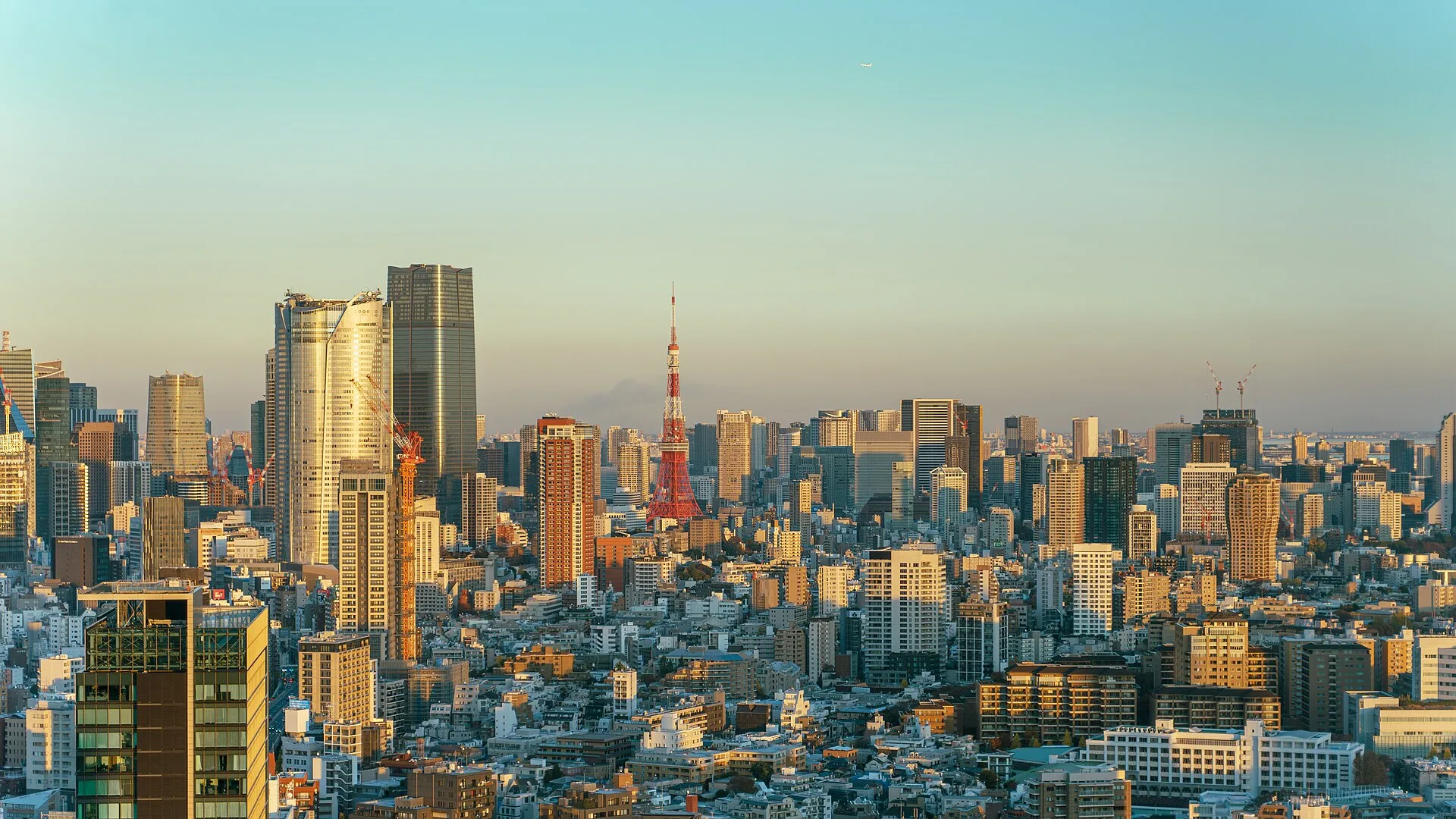
Tokyo in 7 days
Seven real days between the Imperial Palace and Ginza, Asakusa and the Sumida river, the alleys of Shinjuku, a day trip to Kamakura, Shimokitazawa and Kichijōji, teamLab and Toyosu bay: stops on foot, by metro and by train, realistic timings, prices in yen with the euro equivalent and meals where the Japanese eat. Created with Clustrip, exactly as you would see it.
Generated with AI — This itinerary was generated with artificial intelligence, starting from real places and distances. Times, prices and opening hours are estimates: check them before you leave.
East Gardens of the Imperial Palace
Kokyo Higashi GyoenThe East Gardens are the only part of the Imperial Palace open to the public, and they cost nothing: you enter where the keep of Edo Castle once stood, the spot from which Japan was governed. The ritual not to skip is climbing the stone base that carried the tallest tower in the country: the tower is gone, and in its place you look at the skyscrapers of Marunouchi — the modern city seen from where the shōgun watched theirs. In November the gardens are at their best: the maples in here are already red, and the season's dry air brings clear skies. The trip starts from this silence on purpose: Tokyo is best taken from the centre, then in ever wider circles. On the way out, the Ōtemon bridge and the Marunouchi plaza: fourteen minutes.
Suggested time here: 1h 46m
The red facade of Tokyo Station
Tokyo Station, MarunouchiTokyo Station is the only building in the city that looks European without looking fake: red brick and domes from 1914, bombed in 1945 and returned to its original shape in 2012 — a century of Japanese history written on a single facade. The trick to enjoying it isn't inside but across the way: go up to the roof terrace of the KITTE mall, free, and you see the whole of it from above, domes in the foreground and the tracks running alongside. It's also a useful bit of scouting: in three days' time, the train to Kamakura leaves from this station — knowing where it is takes the rush out of that morning. Lunch is a matter of going downstairs: Ramen Street sits in the basement of the station itself, eight minutes of corridors.
Suggested time here: 1h 22m
Lunch: Tokyo Ramen Street, under the station
Tokyo Ramen StreetTokyo Ramen Street is the perfect shortcut for a first lunch: down in the station basement, eight ramen counters picked from the best in the city sit one next to the other, and choosing is half the fun. The ritual is already a piece of Japan: you order at the vending machine by the door — choose the photo, feed in the coins, hand over the slip — and eat at the counter in twelve minutes, the way the commuters do. A bowl runs ¥1,000-1,400 (€5.40-7.50): hard to spend your first yen of the trip any better. It's not a fallback, it's an institution. Then you surface into the light and head for Ginza along Chūō-dōri: a good quarter of an hour of ever more elegant windows.
Suggested time here: 1h 14m
The Ginza crossing and the Wako clock
Ginza Yonchome, WakoThe Ginza crossing with the Wako clock face is the exact spot from which to read the district: the clock has been marking the hours here since 1932, and around it turn the historic department stores and windows signed by famous architects — an open-air museum of architecture where looking costs nothing. If it's a weekend afternoon the gift doubles: Chūō-dōri closes to cars and people walk down the middle of the road, which in Tokyo is a small revolution. The insider's tip, though, is underground: go down into a depachika, the food floor in the basement of the department stores — that's free too, and more fun than the windows. The water garden of Hama-rikyū waits eighteen minutes away.
Suggested time here: 1h 27m
Hama-rikyū, the garden with seawater in it
Hama-rikyu Onshi TeienHama-rikyū is the shōgun hunting garden hemmed in by the towers of Shiodome, and it holds a quiet record: its pond is connected to the bay and rises and falls with the tide — the last one left in Tokyo that breathes like this. The contrast is its show: seawater and quiet paths below, glass towers all around. Entry costs ¥300 (€1.60), and the right pause is the teahouse out in the middle of the water: a matcha with a sweet costs ¥1,000 (€5.40) and stops the day at its best point. Watch the November clock: it closes at 5 pm with last entry at 4:30 pm, which is why the itinerary gets you here now and not later. Dinner under the tracks is twenty-two minutes away, back up towards Yūrakuchō.
Suggested time here: 2h 23m
Dinner under the tracks at Yūrakuchō
Yurakucho Gado-shitaYūrakuchō Gado-shita is dinner under the tracks: izakaya hung with red lanterns tucked into the brick arches of the railway, two steps from elegant Ginza but on the other side of the world. Trains rumble overhead, yakitori sit on the grill, beer fills the glasses: this is where office workers loosen their ties, and it's loud, cheap and completely real — the exact opposite of the shop windows from an hour ago, which is why it works as a closing act. The bill runs ¥2,500-3,500 a head (€13-19), and one thing is worth knowing beforehand: many places bring a small unrequested starter, the otōshi — it's the Japanese version of a cover charge, not a mistake and not a trick. Day one in the books: tomorrow is Asakusa, and it pays to start early.
4 more days await you
Sign up free to unlock every day and save this trip to your profile.
Sign up freeSome links to travel and shopping partners on this page are affiliate links: if you book or buy through them, Clustrip may earn a small commission at no extra cost to you. As an Amazon Associate, Clustrip earns from qualifying purchases.
Guides · Tokyo
How would you rate this itinerary?
Your rating helps us make Clustrip better.